
"global origins"
3000 article(s) found
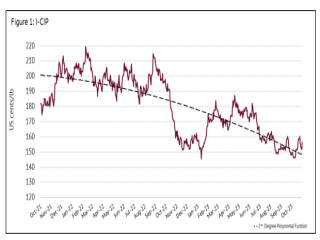
ICO, an international coffee organization, released its October report: global coffee exports fell sharply
According to the latest report released by the International Coffee Organization (ICO), the average composite index price in October was 151.94 cents / lb, down 0.8% from September 2023; the median was 151.58 cents / lb, with monthly prices ranging from 145.99 cents / lb to 160 cents / lb.

Global Coffee Origin-Sao Tome and Principe
In 1800, the Democratic Republic of Sao Tome and Principe introduced Arabica coffee trees from Brazil. Sao Tome and Principe, Africa's second smallest independent state, was a Portuguese colony until 1975, when it won independence. Sao Tome and Principe Democratic Republic Coffee Origin: Sao Tome and Principe

Global Coffee Origin-Madagascar
The Malagasy government plans to develop approximately 2000 hectares of robert coffee plantations and approximately 5000 hectares of arabica coffee plantations. Therefore, the development of the island's coffee industry depends on its potential for Arabica coffee, which, once successfully exploited, promises to be excellent. Madagascar coffee origin: Madagascar (Madagascar) is basically Roscoff

Global coffee beans origin introduction Honduras fine coffee Honduras coffee characteristics Hongdu
Coffee in Honduras is imported from El Salvador. After the Brazilian frost of 1975, coffee production in Honduras increased significantly, more than tripling in 20 years. Coffee growing in Honduras: As elsewhere, coffee grades in Honduras depend on altitude: coffee grown at 700-1000 meters above sea level is medium, and coffee grown at 1000-1000 meters above sea level is medium.

Introduction to the origin of global coffee-Cuban boutique coffee beans Cuban coffee flavor Cuba
According to records, there were 2067 coffee plantations in Cuba in 1833. Among them, the earliest seven coffee plantation sites, such as Raglan Piedra, Elkovre, El Salvador and Nisto Perez, are listed as World Cultural Heritage. These seven coffee plantations are located in the foothills of Maestra in the provinces of Santiago and Guantanamo in southeastern Cuba in the 19th century (figure 17 is a postcard).

Current situation of Coffee Agricultural Market in 2020 Strategy and Plan of Coffee planting in WCR World Coffee
Coffee agriculture in 2020, the world has been subjected to an unprecedented test, and coffee agriculture is no exception. The global pandemic is an indisputable testament to the resilience of diversity, whether we are talking about the supply chain of individual coffee farm roasters, the global economy as a whole or coffee genetic diversity. Coffee companies need to build resilience to thrive in the 21st century. The 21st century

Global Coffee Origin Mexican Coffee Market
Mexico (Mexico) is the fourth largest coffee producer in the world. Most of its coffee is produced by nearly 100000 small farmers, and large estates that once manipulated the coffee industry are rare. Coffee production in Mexico: the best coffee producer in Mexico is Chiapas in the south of the country, where coffee varieties include Tapanchula and Hui

Global Coffee Origin India Coffee Market
There are several reasons why Indian coffee is popular with coffee lovers, but the most important is a process used on coffee beans, often called the monsooning process. Coffee production in India: coffee is grown in the Gozhi Mountains in western India, where the southwest monsoon is crucial to coffee growth. Except in Karnataka (Ka

Global Coffee Origin-Papua New Guinea
The 1975 frost destroyed most of Brazil's coffee crop, but spurred coffee growth in Papua New Guinea. The Government has introduced a scheme to finance the creation of coffee plantations of approximately 20 hectares by rural or collective landowners. This measure has indeed increased the penetration of coffee cultivation into the local economy, resulting in an increase in annual coffee production. Papua New Guinea

A global coffee producer in South Africa.
The country's coffee trees originated in Kenya and are of excellent quality. Only 1000 hectares of arable land was used to grow coffee trees in 1975, but a new nine-year plan was developed in 1987 to expand the area of arable land, resulting in an additional 6000 hectares of arable land. Coffee production in South Africa: coffee production in South Africa (SouthAfrica) is mainly concentrated in the northeast of the country, by Lesotho (Lesotho) and Mozambique

Global Coffee producing area-South Africa Coffee Market
The country's coffee trees originated in Kenya and are of excellent quality. Only 1000 hectares of arable land was used to grow coffee trees in 1975, but a new nine-year plan was developed in 1987 to expand the area of arable land, resulting in an additional 6000 hectares of arable land. Coffee production in South Africa: coffee production in South Africa (SouthAfrica) is mainly concentrated in the northeast of the country, by Lesotho (Lesotho) and Mozambique

Coffee is generally used in the three stages of the global trend of brewing coffee.
The global trend of modern coffee has gone through three popular stages: the first stage is the popularity of cheap coffee represented by instant coffee from the post-World War II to the 1960s; the second stage is the popularity of commercial coffee represented by Starbucks from the 1960s to the beginning of this century; the third stage is the popularity of boutique coffee, which originated in the 1970s and has become a trend in the past decade.

Take stock of the global origin of high-quality coffee beans (2)
Coffee in Indonesia is produced throughout the island of Indonesia. Java occupies an extremely important position in the history of coffee. The best growing areas are in Java, Sumatra, Sulawesi and Frances. On the whole, Indonesian coffee has a strong taste, mellow taste and good acidity. Java produces exquisite aromatic coffee with relatively low acidity and delicate taste.

ICO expects global coffee production to decline in 2011-12
Global coffee exports fell 2% in the first five months of this year to 41.5 million 60-kilogram bags, according to data from the International Coffee Organization on April 1, 2012. The global export volume of coffee during the 2010-11 coffee season was 42.3 million 60kg bags. Exports rose 7% in February compared with the same period last quarter, from 8.67 million bags to 9.32 million bags. The total global coffee production this season is expected to be
Global Coffee Origin-Haiti
Haiti tries to produce some quality coffee despite its well-known problems and fluctuating coffee quality.
Global Coffee Origin-Angola
Angola is the fourth largest coffee producer in the world, but it produces only a small amount of Arabica coffee, which is of high quality. Angola coffee origin: 98% of Angola's coffee is Robett coffee. Angola's best brands used to be Ambriz, Amborm and NovoRedondo, all known for consistent quality
Global Coffee Origin-Brazil
Brazil has been figuratively compared to the "giants" and "kings" of the coffee world. There are about 3.97 billion coffee trees, and small farmers now grow 75 percent of the country's coffee. Brazil has twice or even three times as many coffee producers as Colombia, which is the world's second-largest coffee producer.
Global Coffee Development and spread-the original intention of the birth of "five sad Coffee" in Chinese Cafe
Hougu Coffee, as the largest coffee enterprise in China, has established stable trade relations with more than 40 countries and regions around the world. In recent years, while expanding and strengthening international trade, Hougu is deeply aware of the insufficient cultivation of the domestic market and the urgent need to strengthen the cultivation and promotion of Chinese coffee culture. As the first Chinese cafe in the world, Wubai Coffee is essential to settle down.

A global coffee producer in Tahiti.
It would be a privilege to have Tahiti coffee, because it is extremely rare. Tahiti Coffee Origin: Tahiti Coffee is a kind of Arabica Coffee (TahitiArabica). Tahiti is the largest island in the Social Islands (SocietyIslands). Tahiti coffee features: Tahiti coffee.

The refinement and redefinition of French coffee. Is there a boutique coffee shop in Paris, France?
Professional coffee knowledge exchange more coffee bean information please follow the coffee workshop (Wechat official account cafe_style) the refinement and redefinition of French coffee _ is there a boutique coffee shop in Paris? Until recently, Paris was known for its cafes rather than the quality of its coffee, but over the past decade the city has seen a wave of boutique coffee shop openings. NOA BERGER traceability